Fiber Optic Drones: The Future of High-Speed Connectivity and Surveillance
Fiber optic drones are revolutionizing both communication infrastructure and military surveillance. Combining cutting-edge drone technology with fiber optic cables, these devices provide unparalleled capabilities for high-speed data transmission, field operations, and long-range missions. In this article, we explore what fiber optic drones are, how they work, and their strategic uses—particularly in Ukraine and other conflict zones.
What Is a Fiber Optic Drone?
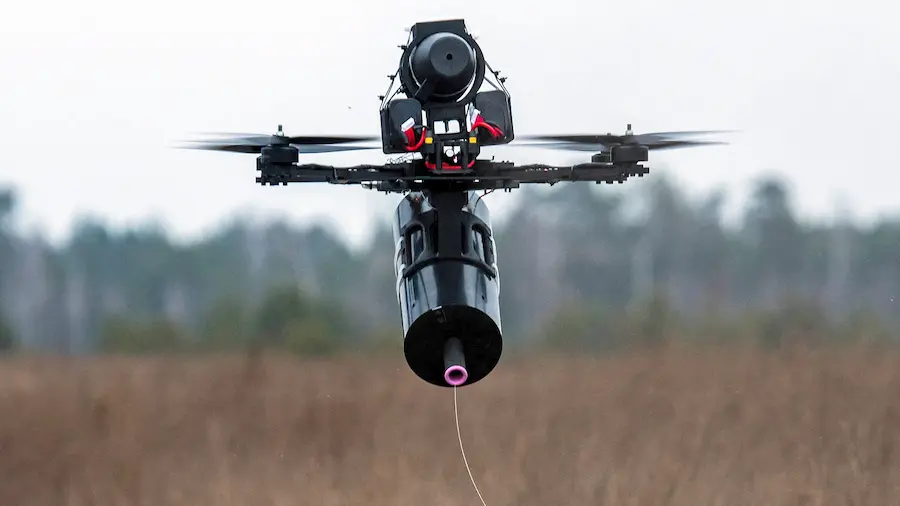
A fiber optic drone is an unmanned aerial vehicle (UAV) equipped with fiber optic cables to transmit data in real time. Unlike traditional drones that rely solely on radio frequency (RF) communication, fiber optic drones carry cables that can provide stable, high-speed, and interference-free data transfer.
These drones are widely used in industries requiring fast and secure communication lines, such as:
- Military operations
- Disaster response
- Remote field communication
- Telecommunications infrastructure
How Does a Fiber Optic Drone Work?
A fiber optic drone works by deploying a lightweight fiber optic cable while in flight. The drone can either:
- Lay cables across difficult terrain for temporary communication lines.
- Serve as a relay, connecting devices or stations that are otherwise out of range.
The drone’s fiber optic cable allows for:
- High-speed data transfer: Much faster than traditional RF connections.
- Interference resistance: Fiber optics are immune to electronic jamming.
- Secure communication: Difficult to intercept without physical access.
Fiber Optic Drone Range
One key advantage of fiber optic drones is their extended operational range. By using fiber optic cables instead of relying solely on radio waves, these drones can transmit data over tens of kilometers without signal degradation. Some military-grade fiber optic drones are capable of connecting bases hundreds of kilometers apart by creating temporary airborne fiber networks.
Fiber Optic Drone in Ukraine
Recent reports highlight the use of fiber optic drones in Ukraine for both communication and battlefield intelligence. The ability to deploy temporary fiber lines across conflict zones allows Ukrainian forces to maintain secure, high-speed communication between front-line units and command centers.
- Ukraine fiber optic drone operations have been crucial in:
- Surveillance over contested regions
- Secure communication for remote military units
- Rapid deployment of temporary internet or telecommunication infrastructure
Russian Fiber Optic Drones
Similar technology has reportedly been deployed by Russian forces, highlighting the strategic importance of fiber optic drones in modern warfare. These drones are especially useful for:
- Intelligence gathering
- Remote control of robotic units
- Laying fiber optic networks in difficult terrain
Fiber Optic Drone Field Applications
Fiber optic drones are not just for military purposes. They have multiple field applications, including:
- Connecting remote villages to the internet
- Laying temporary fiber optic lines during disaster relief
- Supporting scientific research in hard-to-reach locations
Fiber Optic Drone Cable
The drone carries a fiber optic cable, usually made of ultra-lightweight materials to avoid affecting flight performance. This cable:
- Transmits high-bandwidth data
- Can be rapidly deployed
- Serves as a temporary or semi-permanent communication link
Fiber Optic Drone Cables in Ukraine
In Ukraine, fiber optic drone cables are essential for establishing secure communication across war zones. The cables provide reliable data connections even in areas where infrastructure has been damaged or destroyed. They are deployed quickly, often by drones capable of carrying hundreds of meters of fiber in a single mission.
Conclusion
Fiber optic drones represent a remarkable leap in UAV and communication technology. From extending range and providing secure, high-speed data transfer to their strategic use in conflict zones like Ukraine, these drones are shaping the future of both military and civilian operations. Understanding how they work and their field applications is essential for anyone tracking the evolution of modern drone technology.
